
Amalfi Coast: what to see, how to get around, and where to stop for a good visit
Practical guide to the Amalfi Coast: what to see, where to sleep, how to get around the villages, and what stops to choose.
The Amalfi Coast is a place that everyone knows by name, but it is important to understand thoroughly before setting out. It changes the villages, the travel times, the best way to get around, and even the kind of experience you can build, including the sea, trails, terraces on the Tyrrhenian Sea, and small towns full of character. In this guide you'll find information on where to start, how to visit well, where to stop, and what stops to prioritize.
The Amalfi Coast faces the Tyrrhenian Sea on the southern side of the Sorrento Peninsula and is a stretch of coastline about 50 kilometers long. It has been a UNESCO heritage site since 1997, recognized as a cultural landscape of exceptional value, the result of the relationship between nature, topography and human adaptation over the centuries.
In the most current tourism and territorial narrative, the coast is often presented as a system of 13 municipalities united by the same cultural and tourism project: Vietri sul Mare, Cetara, Maiori, Minori, Ravello, Scala, Atrani, Amalfi, Conca dei Marini, Furore, Praiano, Positano and Cava de' Tirreni.
Why the Amalfi Coast is a UNESCO heritage site
The answer lies not only in beauty. UNESCO and Italian institutional portals describe it as an extraordinary example of a Mediterranean landscape, in which steep slopes, terracing, villages, and human activities have built over time a rare balance between nature and human presence. It is this harmony, more than just the landscape, that makes it special.
Amalfi Coast: what are the villages to see
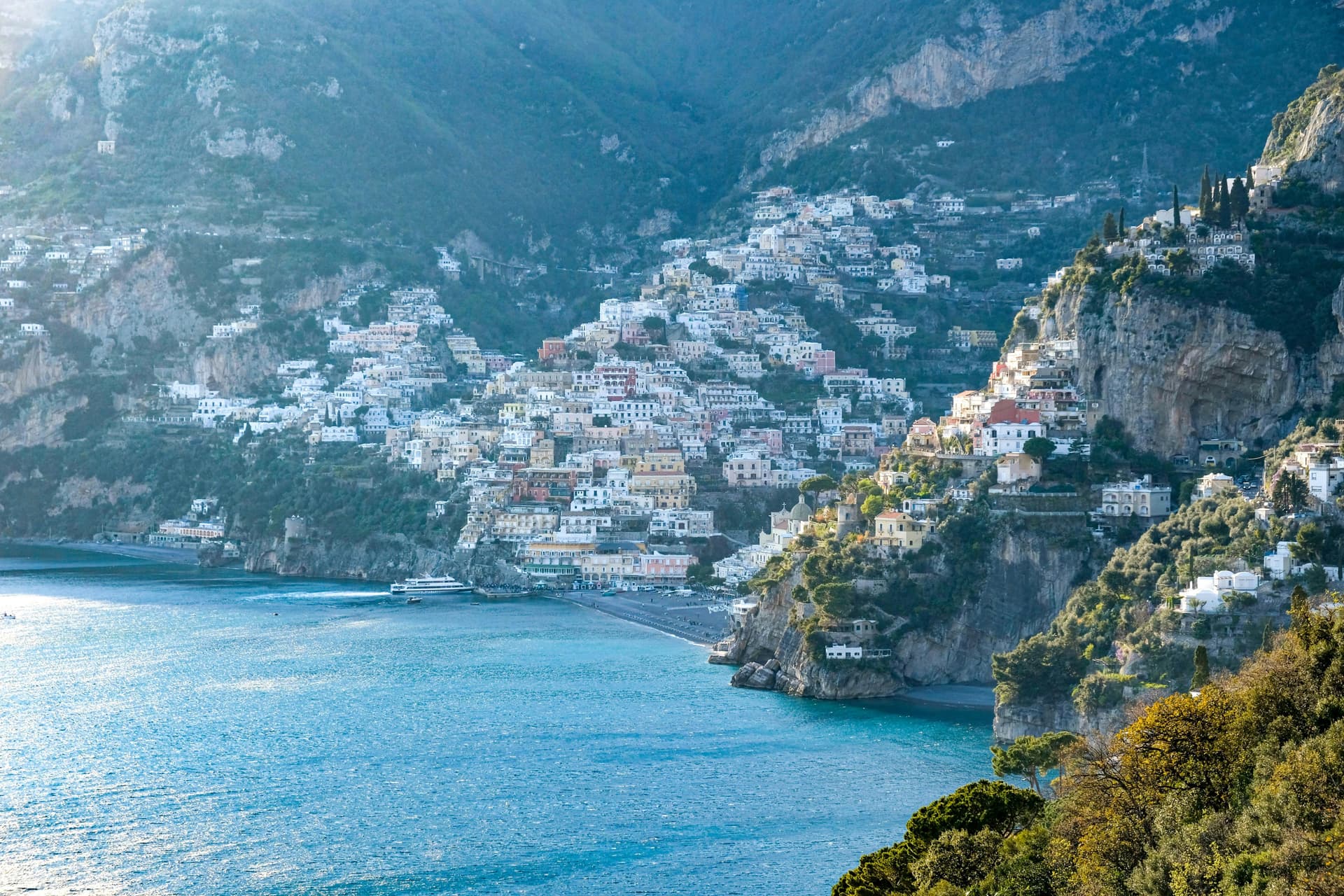
When it comes to things to do on the Amalfi Coast, the villages remain the first place to start. Amalfi is the most symbolic historic center, with the Duomo and the memory of its past seafaring power. Positano is the postcard par excellence, scenic and vertical. Ravello is the right choice for those seeking panoramic terraces, historic villas and a more elegant pace. Vietri sul Mare is famous for ceramics, while Cetara has a more authentic and collected seafaring character.
Maiori and Minori are useful for those who also want simpler beaches to experience, Atrani is tiny and very atmospheric, and Praiano is perfect for those who like a quieter Amalfi Coast. Basically, there is no one "best" village: it depends on your pace of travel.
Amalfi Coast: how to get there from Naples or Salerno and how to get around without a car
From Naples the most common solution is to combine train and road or sea transfer; from Salerno, on the other hand, the Amalfi Coast is often easier to reach, especially in warm weather, thanks to sea connections to Amalfi and Positano.
To travel along the coast without a car, the most practical combination is often SITA South ferries and buses: the ferries are most useful from April to October on the main routes, while the buses remain active year-round but can be crowded during peak periods.
Driving is not always the best choice: the coastal highway is beautiful, but narrow, scenic, and with limited parking. Therefore, those who want to visit several towns in a few days are often better off without a car, or with very purposeful use of scooters or transfers.
What is the best way to visit the Amalfi Coast the first time
For a first-time traveler, the most balanced solution is almost always this: fixed base in a well-connected location, ferries for the best and fastest connections, buses only when needed, private car only if you want to explore less immediate areas or travel during quieter times. It is the easiest way to reduce stress and downtime.
Amalfi Coast: how many days are needed and what is the best order to visit it
To see the Amalfi Coast well you need at least 3 full days; with 4 or 5 days the trip changes a lot, because you can alternate between iconic villages, sea and slower stops. If you start from Salerno, a sensible order is: Vietri sul Mare, Cetara, Maiori-Minori, Ravello, Amalfi, Conca dei Marini-Furore, Praiano and Positano. In this way the route follows the coast with a natural logic and limits some unnecessary returns. This is a reasoned itinerary proposal rather than a fixed rule.
If you only have two days, it is better to give up the idea of seeing everything and choose three main hubs: Amalfi, Ravello and Positano. It's a selection that nicely restores the spirit of the Campania coast without turning the trip into a nonstop rush.

Amalfi Coast: where to sleep to visit it comfortably
The choice of base really makes a difference. Amalfi is central and practical if you want to move in both directions. Positano is perfect if atmosphere and views matter to you, but can be less logistically convenient on busy days. Sorrento, while not one of the towns on the Amalfi Coast, is often a very functional base for those who arrive easily, want more amenities, and intend to explore both the coast and the surrounding area.
That's why Hotiday can help you plan your trip: the Room Collections in Sorrento are strategically located between downtown and the sea, while in Positano it has solutions with panoramic views of the Amalfi Coast, designed for those who want a more scenic stay.
Amalfi Coast: sea, beaches and stops that are also suitable for families
The beaches of the Amalfi Coast are beautiful, but generally not very extensive, precisely because of the conformation of the coast. Positano remains one of the most iconic destinations for those looking for a bird's-eye view, while Maiori is often easier to experience with children due to a more convenient shoreline than many other places along the coast. Minori can also be a practical choice for less complicated beach days.
For families, the best criterion is not to look for "the most famous beach," but the one that is easiest to reach and experience for several hours. On the Amalfi Coast, logistics matter almost as much as the view.
Amalfi Coast: what to eat and what flavors to look for
Among the things to do on the Amalfi Coast is to eat well. The most recognizable flavors are those of the sea and the lemon: the coast is famous for the tradition of lemons and, particularly in Cetara, for the processing of anchovies and colatura di alici, the village's identity product.
In general, on a trip here it makes sense to look for seafood cuisine, citrus, lemon desserts, and specialties related to small coastal towns, rather than chasing menus that are all the same.
Path of the Gods: how much it costs and why to include it in your trip
The Path of the Gods is one of the most celebrated treks in the area, and the basic route is free. Local tourist sources describe it as a route of about 7 kilometers, generally tackled in about 3 hours, with typical departure from Bomerano and arrival toward the Positano side. It is one of the strongest experiences to add to an Amalfi Coast trip, especially in spring or fall. For the more technical part, you can then refer to an article dedicated to Italian caminos.

The Amalfi Coast is best experienced when it stops being a list of stops and becomes a well thought out itinerary. Figuring out where to enter, how to get around, where to sleep, and which towns to really put at the center of the trip allows you to enjoy the landscape, the villages, and the sea much more.
Check out all the rooms selected by Hotiday and find the right base to experience the Amalfi Coast with more comfort, less stress and an even better view of the journey.