
Things to see in Salento: what to visit between sea, cities and itineraries
Practical guide to things to see in Salento: how to plan your trip between the Ionian and Adriatic coasts, what stops to choose, and where to sleep.
Salento is one of the most popular destinations in southern Italy, but also one of the worst organized. The problem is not finding beautiful places to see, but figuring out how to get around between the Ionian and Adriatic coasts, choosing the right stops and not wasting time in travel. In this guide you find the things to see Salento really useful to build a balanced trip, between sea, cities and strategic areas where to sleep.
The heart of the Salento is Lecce, not only in historical importance but also in location. It is the point from which it is easiest to reach both coasts and build different days without continuously crossing the entire peninsula. For those who have only a few days, Lecce is a very smart base: it allows you to alternate between the historic center, villages and the sea without overcomplicating the logistics.
At the opposite extreme is Santa Maria di Leuca, the tip of Puglia, one of the most iconic places on the trip. It has a lot of charm, but precisely because of its location it should be thought of as a dedicated stop, not as a quick detour to be included at the last minute. If you include it, you'd better build that day well and focus on the entire southernmost part of Salento.
Ionian coast and Adriatic coast, which to choose?
The most important distinction to understand before leaving is that between the Ionian and Adriatic coasts. The Ionian coast, between Gallipoli, Porto Cesareo, Torre Lapillo and Punta Prosciutto, is the easiest and most straightforward: sandy beaches, shallow waters, convenient access and a very straightforward management of the days. It is the most natural choice for families, groups or those who want an uncomplicated beach vacation.
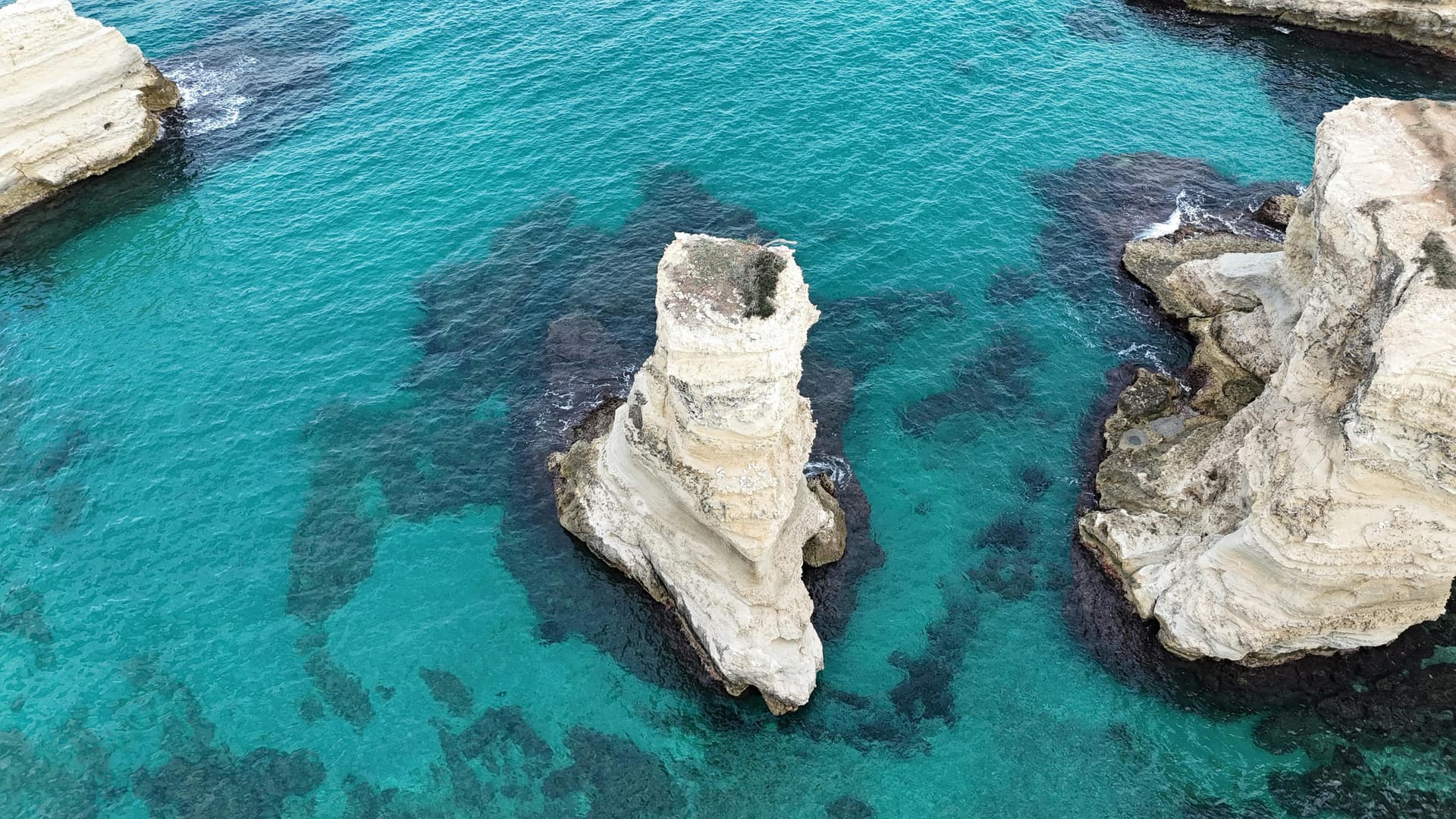
The Adriatic coast, on the other hand, from Otranto to Santa Cesarea Terme and Leuca, is more rugged and scenic. Here you find cliffs, coves, often clearer water and a stronger landscape visually, but with fewer "classic" beaches and generally less immediate access. Basically, if you're looking for sand and comfort it pays to aim for the Ionian; if you're looking for scenery, coves and a wilder sea, the Adriatic is often more interesting.
Which cities and towns to include in the trip
Lecce, Otranto and Gallipoli remain the three main cities to put on the list, but they are not the only stops worthwhile. Nardò is one of the most interesting for balance between the beauty of the historic center and strategic location near the Ionian coast. It is a stop that works well both as a visit and as a home base.
Inland, however, villages such as Specchia and Presicce help you see a more authentic side of Salento, slower and less tied to the sea alone. They are particularly useful stops when you want to break the rhythm of beach days or avoid always being on the coast during the hottest hours. In this sense, Salento works best when it alternates well between sea and small towns, not when it is reduced to a single sequence of beaches.
Where is the most beautiful sea
The most beautiful sea in Salento depends a lot on the kind of experience you are looking for. If you want clear water, reefs and more natural scenery, the Adriatic stretch between Otranto and Santa Cesarea Terme is among the most interesting. It is the part of the coast that is often most striking from a landscape point of view.
If, on the other hand, your ideal is an easy beach day with clear sand and shallow waters, then the stretch between Punta Prosciutto, Torre Lapillo and Porto Cesareo remains one of the most popular. These are popular areas because they make everything easier: immediate access, wide beaches and a sea that works well even for those traveling with children. The real mistake here is wanting to chase a different coast every day: the Salento is best enjoyed when you choose homogeneous areas and organize your days by zones.
Where are the Maldives of Salento and what to expect
The Maldives of Salento are located in the area of Pescoluse, between Torre Pali and Lido Marini. It is one of the most famous stretches of the Ionian coast, known for its clear sand, clear water and shallow waters reminiscent of almost tropical scenery. It is an iconic stop, especially for those seeking the more "postcard" side of Salento.
However, it should be clearly stated that it is also one of the busiest areas in the summer. This does not mean avoiding it, but visiting it with the right expectations. If you want to experience it better, it pays to arrive early or move slightly away from the most central and most photographed spots.
Where best to stay to get around Salento well
The choice of accommodation affects much more than it seems. Areas like Lecce or the area between Nardò and Gallipoli are among the most strategic, because they allow you to move around without constantly crossing the entire peninsula. They are smart bases especially if you want to see both city and sea and not get stuck on one coast.
Sleeping too far south or moving too far along one coastal strip can make travel longer and more tiring, especially in the busier months. In general, it pays to choose a central base and make arrangements.
Where to sleep if you're looking for nightlife or relaxation
If you're looking for movida, Gallipoli remains the main reference, especially in summer. Clubs, events and a very active nightlife are concentrated here, so it is the most natural choice for groups or travelers who want a more dynamic stay.
If, on the other hand, you are looking for a more relaxed trip, Otranto or some inland villages offer a more manageable pace, less chaos and a more balanced experience. This is why it can be summarized as follows: Gallipoli works best for young people and fun, Otranto or the hinterland for couples and quieter stays.
When to go and where to spend less
The best time to visit Salento is between June and early July or in September. In these weeks you can experience both the sea and the cities well, with less traffic, less crowding and much easier overall management. August, on the other hand, remains the most complicated month: higher prices, full beaches and heavier travel time.
If you want to keep your budget down, it's best to avoid Gallipoli, Otranto and the more central areas during peak periods, moving slightly inland or to less popular locations such as Nardò or Ugento. Here you often find a better balance between cost of stay and proximity to the sea. The trade-off is a few more minutes on the road, but with a much more economically sustainable vacation.

There is no shortage of things to see Salento, but the difference is in how you organize your trip. Figuring out beforehand whether you want to aim for the Ionian or the Adriatic, choosing a sensible base and distributing the stops well allows you to experience Salento with more freedom and less dispersion. It is a destination that gives a lot, but only if you approach it with a minimum of strategy.
To better organize your stay, starting from an already optimized selection can help you simplify everything. On Hotiday you can find solutions designed to combine location, comfort and ease of travel, so you can experience Salento without unnecessary complications. Discover all the rooms selected by Hotiday and find the ideal room for your next trip among the cities, sea and villages of southern Apulia.